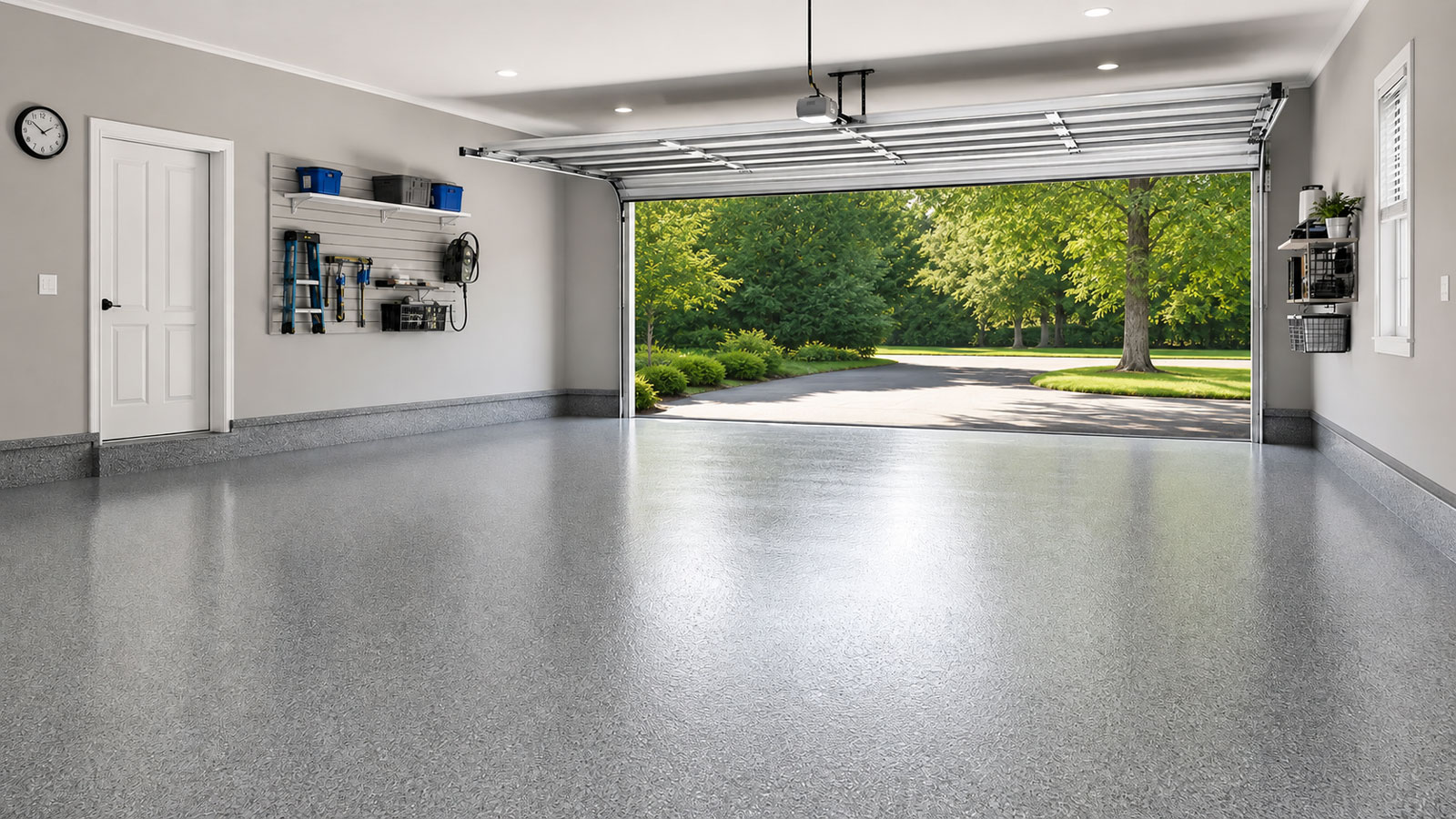
Garage Floor Coating in Maumelle, AR
Floor Coating Services in Maumelle, AR
A garage floor coating in Maumelle should begin with a planned residential garage with driveway and landscaping transitions. Maumelle's stormwater plan identifies corridor drainage ditches as priority areas. Those community details can guide questions about runoff and maintenance, but they cannot establish that a particular garage has moisture problems. The installer must inspect and prepare the concrete.
Its post-construction requirements cover qualifying new development and redevelopment disturbing one acre or more. The city requires controls designed to limit increased runoff and downstream erosion. For homeowners, inspect actual joint wear, builder treatments and threshold drainage. Water tracked in on tires, rain moving over a doorway and persistent moisture within concrete require different assessments. An estimate should describe any real water entry or contamination observed rather than assume public drainage conditions reveal a home's slab.
For vehicles and recreational equipment in an attached garage, the finish should balance appearance, texture, cleaning and reopening time. A contractor should explain grinding, removal of old paint or sealer, suitable crack treatment and how different layers of an epoxy or polyaspartic system work together. Warm or humid Arkansas weather affects scheduling but does not replace the product's written installation instructions. Ask for an itemized preparation and curing plan.
Local Market Insight
The city requires controls designed to limit increased runoff and downstream erosion. This helps frame actual joint wear, builder treatments and threshold drainage, but no public drainage detail establishes the state of an individual garage floor.
What Affects the Cost of Garage Floor Coating in Maumelle?
Garage floor coating costs in Maumelle depend on the observed slab, not just its area. In a planned residential garage with driveway and landscaping transitions, actual joint wear, builder treatments and threshold drainage may influence repairs and grinding where those conditions are genuinely present. The scope should distinguish required substrate work from decorative upgrades.
A proposal should also discuss access for equipment, whether stored items must move and how vehicles and recreational equipment in an attached garage will be handled during curing. Compare identical work scopes, not just headline price ranges or promises associated with a coating chemistry.
- Existing surface: A garage in a planned residential garage with driveway and landscaping transitions may have paint, sealer, bare concrete or an old resin finish. Identify the surface before determining whether removal or additional profile grinding is necessary.
- Water and drainage: Maumelle's stormwater plan identifies corridor drainage ditches as priority areas. That is not proof of dampness at the property. Inspect doorway runoff, the driveway's direction of slope and any spots that persist after dry weather.
- Cracks and patching: Check actual joint wear, builder treatments and threshold drainage and any moving joints, pitting or previous repairs. A coating cannot prevent structural concrete movement; each observed flaw calls for an appropriate plan.
- Garage edges and fixtures: Steps, storage cabinets, floor drains and irregular transitions change equipment access and labor. Ask what will be moved and how the crew plans to prepare the perimeter.
- Texture and color: Decorative flakes and topcoat texture influence cleanup and grip when shoes are wet. A glossy appearance is not itself evidence of a suitable or durable coating specification.
- Cure and work timing: Hot weather, humidity and the floor's conditions affect application choices under manufacturer instructions. If the garage serves vehicles and recreational equipment in an attached garage, discuss temporary parking and when tires can safely return.
Call for a clear, project-specific estimate — or request one online.
Maumelle Runoff Context and the Garage Door
Maumelle's stormwater plan identifies corridor drainage ditches as priority areas. Its post-construction requirements cover qualifying new development and redevelopment disturbing one acre or more. These are locally documented land-use or municipal operations facts. They make drainage an appropriate homeowner question but cannot locate moisture at a specific property. The relevant inspection is of the garage's own apron, doorway and concrete surface, not simply of a community map.
The city requires controls designed to limit increased runoff and downstream erosion. Public stormwater systems address runoff in roads, ditches and drains. Garage concrete, meanwhile, can receive water from a leaking door, gutters, parked wet cars or slab moisture. The contractor should distinguish those sources before selecting primers or topcoats. A new decorative finish is not a remedy for an unresolved leak.
During heavy rainfall, watch whether water crosses the threshold. With vehicles absent, note any continuing dampness, stained edges or failing old paint. Evaluate actual joint wear, builder treatments and threshold drainage when actually seen. An honest project scope should say what preparation is required and whether further drainage or moisture assessment is needed before coating.
Surface Preparation and Daily Garage Use in Maumelle
The useful starting point for a planned residential garage with driveway and landscaping transitions is the existing concrete, not the home's construction date. A garage may have been expanded, repoured or refinished later. An installer should identify previous paint or sealer, oil, tire residue, old patches and cracks, then choose appropriate mechanical profiling rather than rely on a one-size-fits-all formula.
A sound epoxy or polyaspartic installation depends on how well each layer bonds to prepared concrete. Ask for a clear grinding plan, the proposed repairs and treatment of control joints. Active movement, serious deterioration and persistent moisture deserve specific evaluation; resin coatings do not cure those problems automatically.
Finally, plan around vehicles and recreational equipment in an attached garage. Move equipment where crews can prepare edges, agree on a finish texture for wet-shoe traction and select a cure window that allows alternative parking. The written scope should describe the coating system, topcoat, expected return-to-use time and cleaning routine. A locally relevant proposal will also discuss actual joint wear, builder treatments and threshold drainage without inventing problems that have not been observed.
- Inspect existing floor finishes and contamination.
- Mark cracks, control joints and repairs.
- Check actual driveway-to-door runoff.
- Distinguish wet-car puddles from persistent moisture.
- Plan access and stored-item relocation.
- Compare written system and curing instructions.
Frequently Asked Questions
Does Maumelle's drainage program prove a garage needs special treatment?
No. Maumelle's stormwater plan identifies corridor drainage ditches as priority areas. The citywide context raises useful questions, but only inspection can show whether water, old coatings or surface damage affects the specific garage. Evaluate that evidence before choosing materials.
Can an older Maumelle garage floor be coated?
Possibly. Concrete may have been repoured or refinished after a house was built. Check structural soundness, patches, contamination and old coatings. A site assessment is more reliable than treating neighborhood age as slab age.
What if rain reaches my garage threshold?
Observe the driveway slope, gutters and door seal. Repeated exterior runoff should be corrected before coating, while water from wet parked cars is a different concern. A decorative finish does not replace drainage repair.
Is epoxy or polyaspartic better during Maumelle summers?
Either may be appropriate when installed under its product requirements. The substrate profile, moisture conditions, system layers, texture and cure time matter more than chemistry alone. Ask for the full installation specification.
What belongs in a Maumelle garage coating quote?
Request clear steps for preparation, old-finish removal, concrete repairs, edge treatment, primer, decorative layers and topcoat. For vehicles and recreational equipment in an attached garage, confirm alternate parking, product cure instructions and the cleaning regimen after installation.
Maumelle Neighborhoods & Local Context
Phone Quote Line
Speak with a floor coating specialist about your project and get a realistic estimate range.
(501) 300-9966Typical Project Cost
$3,000–$5,500
Typical two-car garage range. Final pricing depends on floor size, concrete condition, prep work, coating type, and finish options.
Helpful Guides
Other Service Areas